T-Shirts to Bags?
... when colours could speak
I remember once reading a comment attributed to David Bowie, along the lines of: creators always want to explain the process, when most people are really only interested in the offer.
As a creator myself, that’s more or less the running theme of everything you’ll find here. There’s a story behind these bags, and how they came to be. You might enjoy reading it, or you might not care at all, and that’s completely fine. We’re all different, and that’s exactly what makes things interesting.
I started this label not to chase trends, or do what everyone else is doing, but to offer something for people who might share similar thoughts, and maybe like the aesthetic that comes with it.
So here, you’ll usually find mismatched pieces – things that don’t quite fit into one coherent theme or product line. The real constant is the logic behind them: use what you have, rewear it, exchange it, or give them a new life in another form.
When buying new, be picky about the ingredients and the process, and try to leave as low an environmental footprint as possible. And all that while looking stylish, and unlike anyone else.
That said, let’s talk about the newest bag.
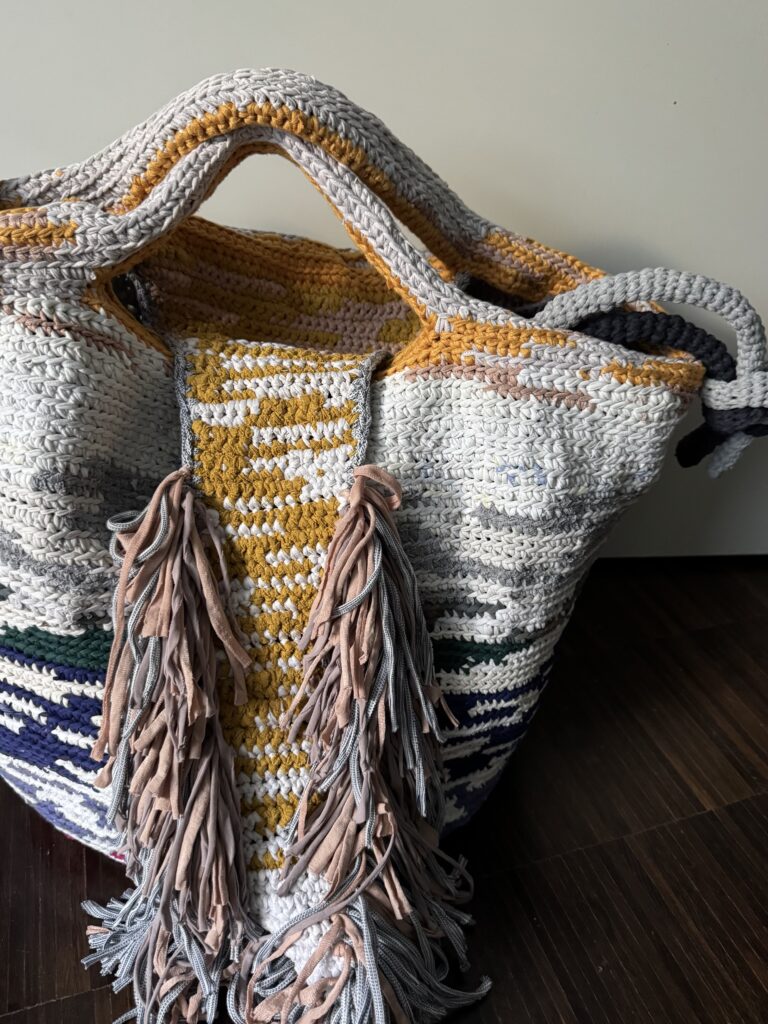
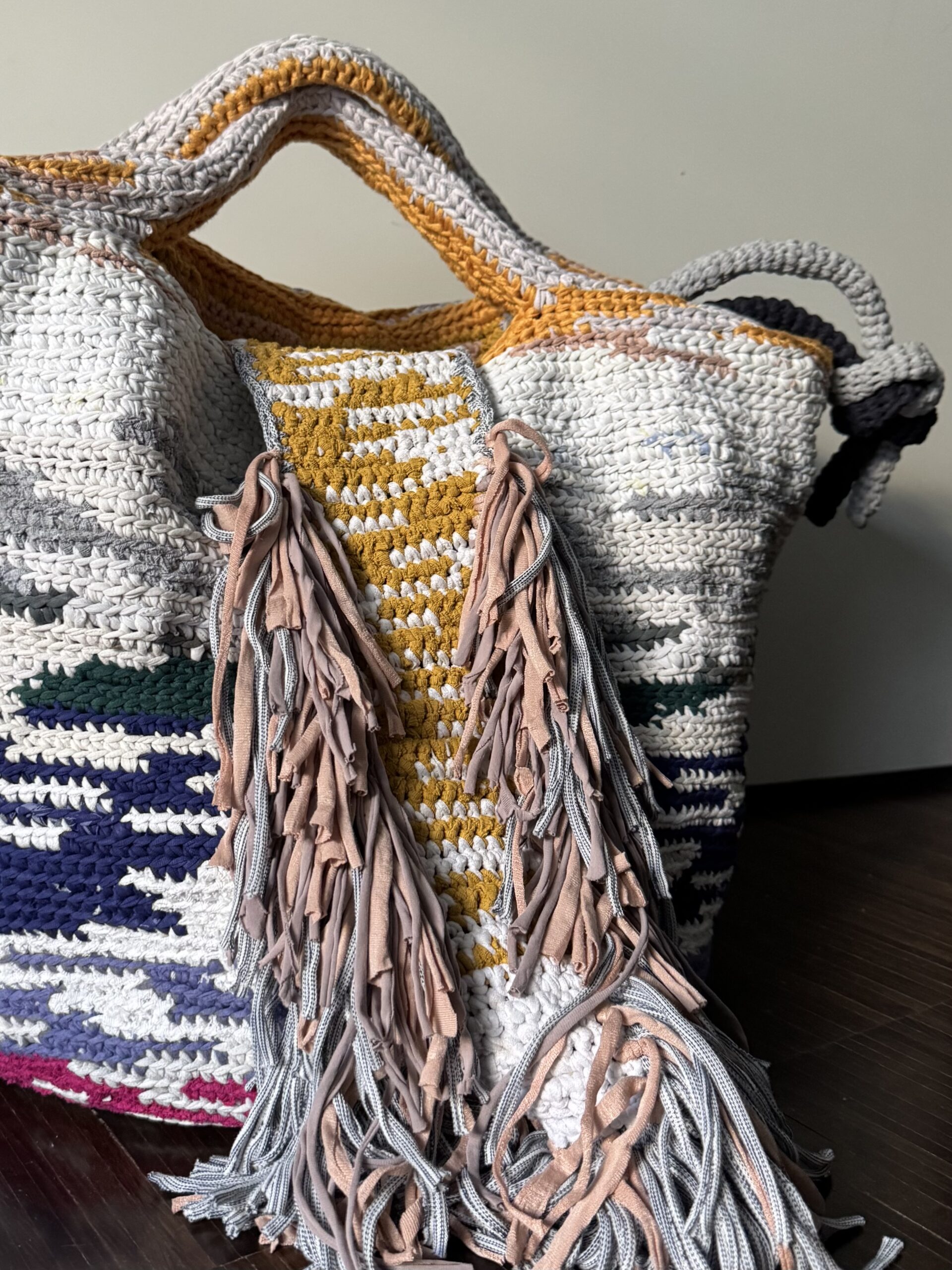
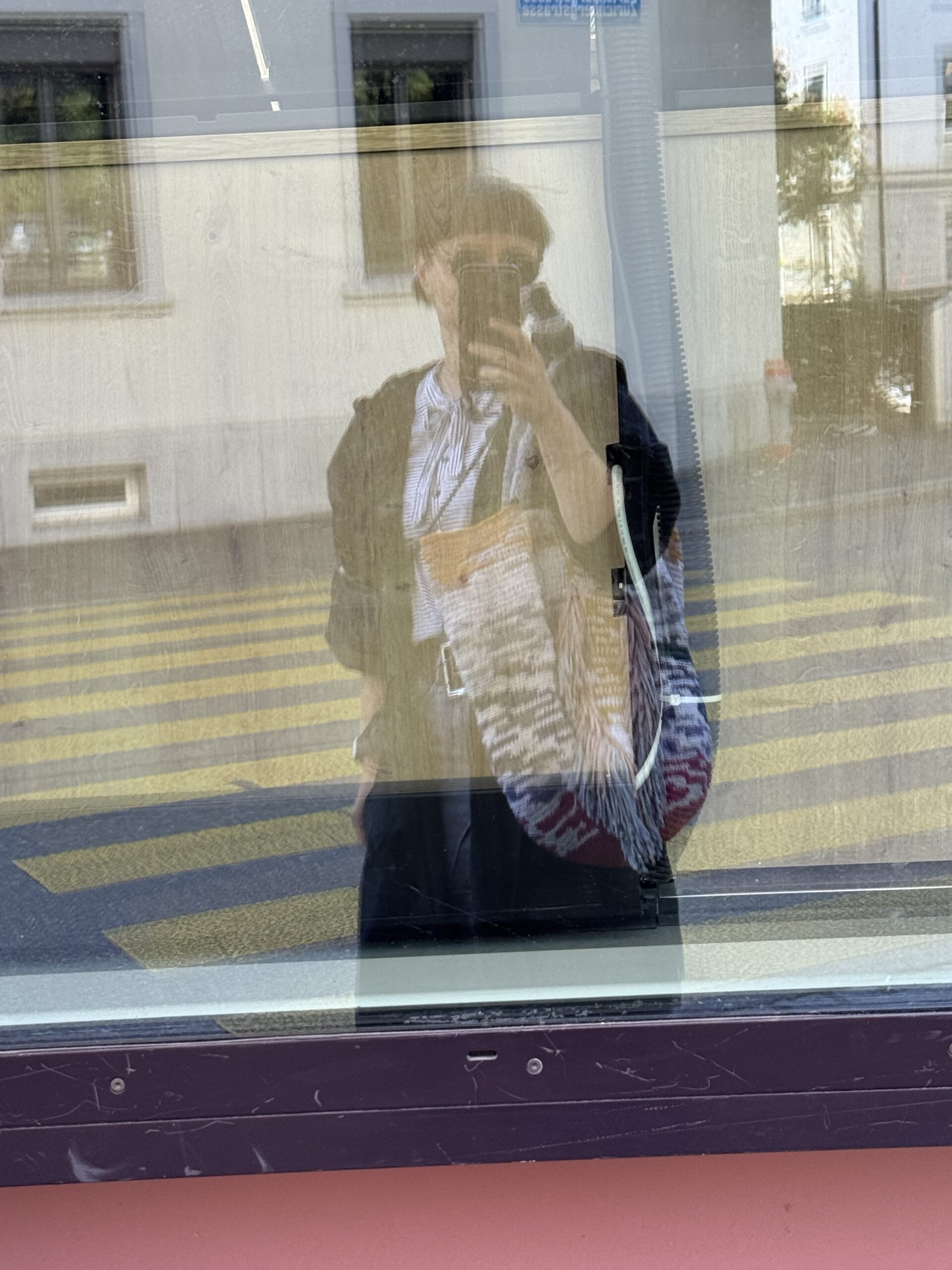
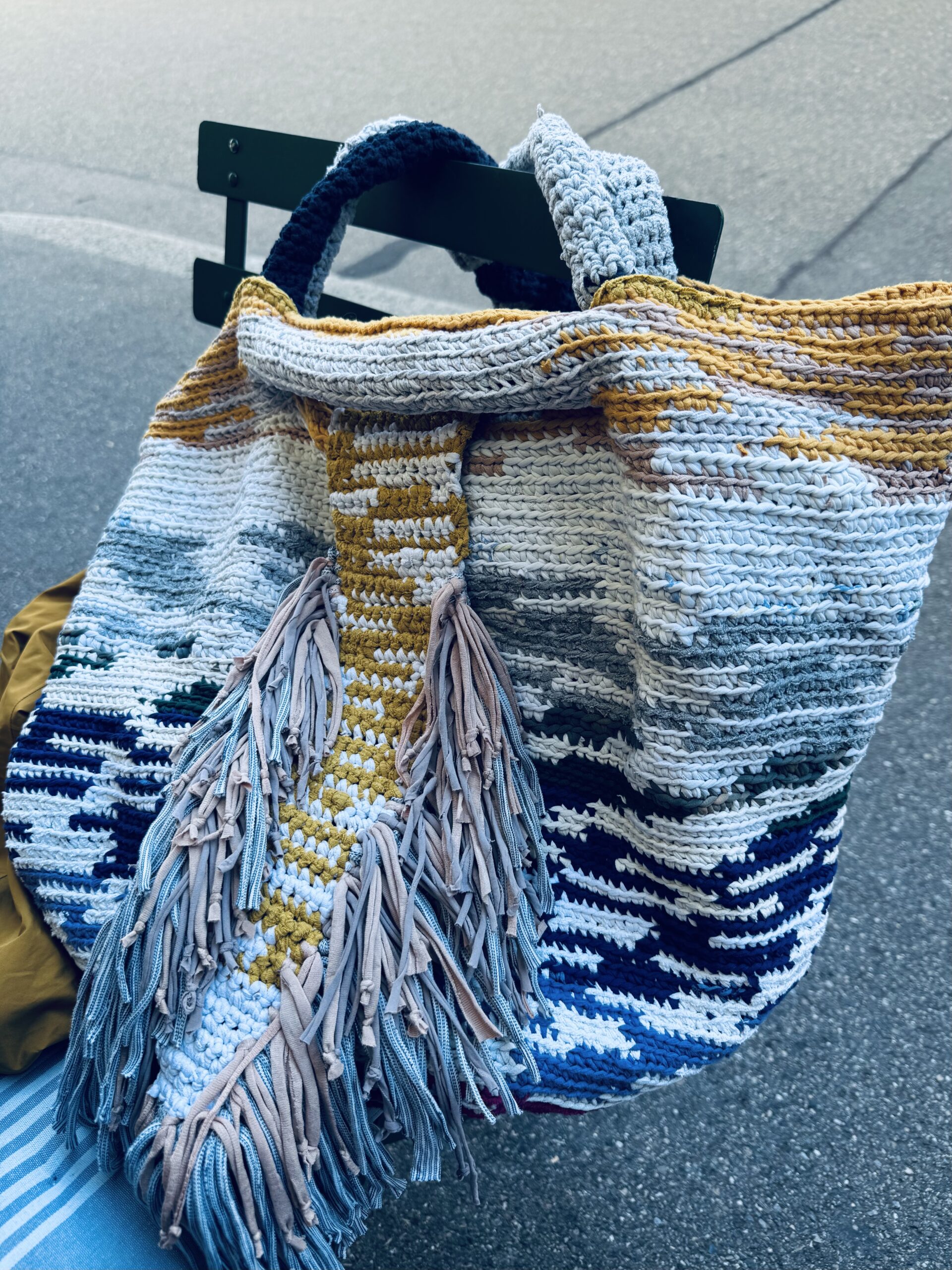
This – City Lights In The Water Bag, assembles 20 different cotton pieces: T-shirts, undershirts, bodies, boxer shorts … combining nearly every colour usually found in our wardrobe at home: orange, coral red, mustard, blue, purple, magenta, white, grey, green.
Each colour represents one piece of clothing (plus a few of them in white).
It was made for summer, even with winter already knocking – simply because there was enough prepared textile yarn ready, and it made more sense to use it now than wait for warmer days.
It also took me a while to convince myself that combining all these colours wouldn’t tip the whole thing into “too much”…plus, figuring out the right handles.
How long one of these bags takes to finish is hard to say exactly.
Much like crocheting with sock-loop yarns for Home Slippers or bags, upcycled textile yarn needs cutting and preparing before any crochet even begins. That time is factored into the price, because that’s simply fair.
Why does it matter so much to actually use preloved or already-worn clothing made from natural fibers, even though they would eventually disintegrate in a landfill anyway?
Because that’s the loop we do want to follow. The problem is that making new textiles, even “sustainable” ones, still draws on natural resources: growing the plant, turning it into fibre, spinning it into yarn, and all the chemical processing and dyeing that comes with it. That’s hard to call fully sustainable, especially once you look closely at quality and lifespan.
Modern Technologies
There are genuinely promising movements pushing this forward – Stella McCartney’s SS26 collection, for instance, featured Fevvers, a plant-based alternative to feathers made from dyed grass and hand-stitched onto the garments, alongside PURE.TECH-treated denim treated with a technology that actively absorbs CO₂ and other pollutants from the air. Algae-based yarns, spun from kelp and seaweed, are also being developed into knitwear. As exciting and necessary as these innovations are, they still represent a very small percentage of the industry as a whole.
Our contribution
In my logical mind, it makes real sense or even necessity to use as much of the natural textiles that already exist, and do what we can to extend their lifespan.
That’s our contribution: using pieces that are no longer repairable, and would otherwise be thrown away and give the new forms and the next unexpected life to live.
And if you also like the aesthetic, you’re in the right place. 🙂
Feel free to comment, suggest, or disagree – all of it welcome.
Made to Order, soon
And there it goes… two pieces of used, half-destroyed curtains became three pieces of clothing that can be worn together or separately. They can look like two different outfits for a more elegant fit, or be combined with different tops or bottoms for more everyday occasions.
These trousers will soon be available as a Made-to-Order piece in the Shop – depending on available fabric, the end result can vary in style. That said, I’m leaning more toward Ready-to-Wear drops (what you see is what you get), but for that I need your input.
Send me your wishes (size, length, style, fabric, colour) directly to frenzy@frenzyloop.com, or subscribe to our newsletter below to get the first news and special offers:
Close the loop.
Enter the FrenzyLoop.